



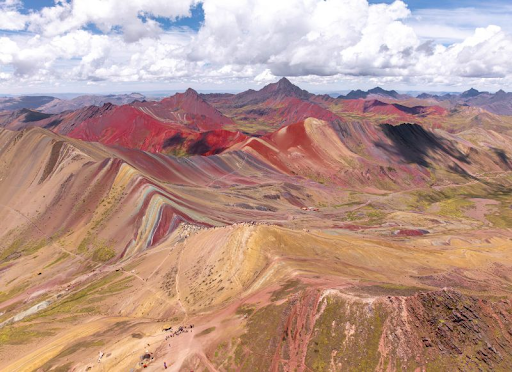
Rainbow Mountain and Red Valley are two of the most visually striking natural attractions in the Peruvian Andes. Located high in the Vilcanota mountain range near Cusco, these landscapes have gained international recognition for their intense colors, dramatic terrain, and unique geological formations. Visiting Rainbow Mountain and Red Valley together offers travelers a richer and more complete experience, combining iconic scenery with a quieter, equally breathtaking alternative that showcases the raw beauty of the Andes.
Understanding Rainbow Mountain
Rainbow Mountain, also known as Vinicunca or Montaña de Siete Colores, is famous for its naturally occurring bands of vibrant colors. These stripes are the result of mineral deposits that have been exposed over time due to erosion and tectonic activity. Iron oxide creates reds and browns, sulfur contributes yellow tones, and copper minerals add greens and blues.
Sitting at an elevation of over 5,000 meters (16,400 feet) above sea level, Rainbow Mountain is one of the highest-accessible attractions in Peru. Its striking appearance against the backdrop of snow-capped peaks has made it a symbol of Peru’s diverse natural wonders.
The Red Valley: A Hidden Complement to Rainbow Mountain
Just a short distance from Rainbow Mountain lies Red Valley, an extraordinary landscape that often surprises visitors with its intense crimson hues. Unlike Rainbow Mountain’s multi-colored bands, Red Valley is dominated by deep red and rust-colored earth, shaped by iron-rich soil and centuries of erosion.
The Red Valley remains less visited, offering a more tranquil and immersive experience. Its wide-open spaces, rolling hills, and dramatic contrasts create a powerful visual impact, making it a perfect complement to the vibrant slopes of Rainbow Mountain.
Why Visit Rainbow Mountain and Red Valley Together?
A More Complete Experience
Visiting Rainbow Mountain and Red Valley in one journey allows travelers to experience two distinct yet connected geological wonders. While Rainbow Mountain delivers iconic color patterns, Red Valley offers scale, solitude, and dramatic scenery.
Fewer Crowds and Greater Tranquility
Rainbow Mountain can be busy, especially during peak season. The Red Valley route provides a quieter alternative, giving visitors time to reflect and enjoy the natural environment without the pressure of crowds.
Enhanced Photography Opportunities
The contrasting colors of both landscapes create exceptional photographic possibilities. The combination of multicolored slopes and vast red terrain adds variety and depth to visual storytelling.
The Journey to Rainbow Mountain and Red Valley
Most trips begin in Cusco with an early morning departure. Travelers journey through the southern Andes, passing traditional villages, high-altitude plains, and grazing herds of alpacas and llamas. The drive itself offers insight into rural Andean life and stunning scenery.
After reaching the trailhead, visitors hike toward Rainbow Mountain. The trail is gradual but challenging due to altitude. Once Rainbow Mountain is reached and explored, the route continues toward the Red Valley, descending into a wide-open landscape that feels remote and untouched.
Hiking Conditions and Difficulty
The hike to Rainbow Mountain and Red Valley is considered moderate to challenging, primarily because of the high elevation rather than technical difficulty. The trails are well-defined, but the thin air can make even gentle slopes feel demanding.
Proper acclimatization in Cusco is essential. Travelers are encouraged to take their time, maintain a steady pace, and stay well-hydrated. Many visitors find the Red Valley portion of the hike slightly easier due to gradual descents.
Best Time to Visit Rainbow Mountain and Red Valley
The best time to visit Rainbow Mountain and Red Valley is during the dry season, from May to September. These months offer clearer skies, better trail conditions, and more vibrant colors.
The rainy season, from November to March, brings greener surroundings but also increases the likelihood of muddy trails and reduced visibility. Weather can change quickly at high altitude, so preparation is key regardless of the season.
What to Bring for the Experience
Due to the high altitude and changing weather conditions, packing appropriately is essential. Recommended items include:
- Warm, layered clothing
- Waterproof jacket or windbreaker
- Comfortable hiking shoes
- Hat, gloves, and scarf
- Sunglasses and sunscreen
- Water and energy snacks
- Camera or smartphone for photos
Because facilities are limited, travelers should carry all necessary supplies with them.
Cultural and Environmental Significance
Rainbow Mountain and Red Valley are located within regions that are still deeply connected to Andean traditions. Local communities rely on agriculture and livestock, and their relationship with the land is rooted in respect and sustainability.
Responsible tourism plays a vital role in preserving these landscapes. Visitors are encouraged to stay on marked trails, avoid disturbing wildlife, and carry out all waste. Supporting local guides and community-based tourism initiatives helps ensure long-term conservation and economic benefits for the region.
Who Should Visit Rainbow Mountain and Red Valley?
This experience is ideal for:
- Nature lovers seeking unique landscapes
- Adventure travelers comfortable with high altitude
- Photographers looking for dramatic scenery
- Travelers wanting to explore beyond classic routes
It may not be suitable for those with limited mobility or insufficient time for acclimatization.
The Emotional Impact of the Landscape
What sets Rainbow Mountain and Red Valley apart is not only their appearance but also the emotional response they evoke. Standing among vast, colorful mountains at extreme altitude creates a sense of humility and awe. The silence of the Red Valley, broken only by wind and distant wildlife, offers moments of reflection rarely found in more crowded destinations.
Conclusion
Rainbow Mountain and Red Valley together represent one of the most extraordinary natural experiences in Peru. While Rainbow Mountain captivates with its vivid mineral colors, Red Valley offers scale, solitude, and dramatic beauty that deepen the journey. Exploring both landscapes in one trip provides a balanced and unforgettable adventure through the high Andes. For travelers seeking stunning scenery, cultural connection, and a sense of exploration, Rainbow Mountain and Red Valley stand as powerful reminders of nature’s artistry and the timeless beauty of the Peruvian Andes.

